
New Zealand’s long-standing approach to medicines funding has been shaped by a simple imperative: contain cost. That focus has delivered a system that is regarded as less than efficient, but increasingly, it is also being questioned as insufficient.
At the heart of the issue is a framing problem. Medicines are too often treated purely as an expense within the health budget, rather than as an investment in outcomes that extend well beyond the immediate cost of treatment.
This distinction matters.
When innovative medicines are delayed or unavailable, the consequences are not limited to the health system. They are felt across the economy, in workforce participation, productivity, long-term care costs and, most importantly, in the lives of patients and their families.
In this sense, medicines are not simply a line item in a budget. They are an intervention that can reduce downstream costs, improve quality of life and support broader economic and social outcomes.
A system under pressure
New Zealand’s medicines access model has historically prioritised cost-effectiveness within a tightly constrained budget. While this has delivered discipline, it has also resulted in significant delays in access to new and innovative treatments compared with comparable countries.

For patients, these delays are not abstract. They represent time without access to therapies that may slow disease progression, improve survival or enhance quality of life.
For clinicians, they create challenges in delivering care that aligns with international standards.
And for policymakers, they raise increasingly difficult questions about equity, system performance and New Zealand’s place within the global healthcare landscape.
Medicines Investment New Zealand
Reframing medicines as an investment requires a broader lens.
The value of a medicine should not be assessed solely on its acquisition cost, but on its contribution to:
- reduced hospitalisations and healthcare utilisation
- improved workforce participation and productivity
- decreased long-term disability and social support costs
- enhanced patient outcomes and quality of life
Internationally, there is growing recognition that healthcare spending, when directed effectively, can generate measurable economic returns.
Countries that take a more investment-oriented approach to medicines funding are often better positioned to realise these benefits, not only in health outcomes, but in economic resilience and system sustainability.
A changing policy environment
There are early signs that the conversation in New Zealand may be shifting.
Recent engagement between government, industry, clinicians and patient groups suggests a move away from a purely adversarial model towards a more collaborative approach. This shift reflects a recognition that improving access to medicines is not simply a question of cost, but of system performance and long-term outcomes.
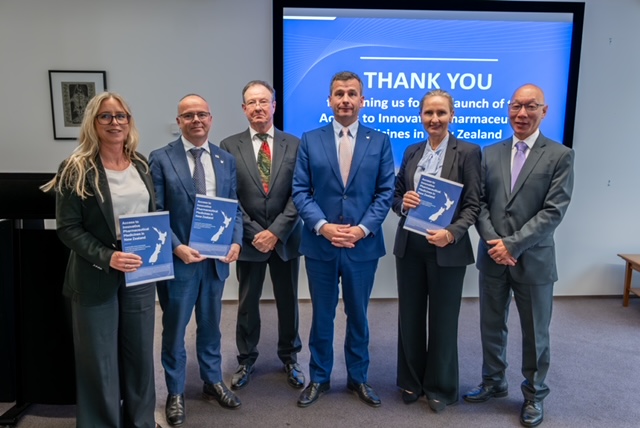
At a recent policy discussion, the concept of partnership, rather than opposition, was highlighted as an emerging direction of travel. The presence of stakeholders from across the system in a shared forum would, until recently, have been unlikely. That such discussions are now taking place is itself a signal of change.
Towards a more balanced approach
None of this suggests that fiscal discipline should be abandoned. On the contrary, it remains essential.
But discipline should be balanced with a clearer understanding of value.
A more mature approach to medicines policy would recognise that:
- timely access to effective treatments can reduce overall system costs
- investment in innovation can deliver long-term economic and social returns
- collaboration across stakeholders can support better decision-making
This requires not only policy change, but also a shift in mindset.
The opportunity ahead
New Zealand has the foundations of a strong health system. The question is whether it is prepared to evolve.
Reframing medicines as an investment is not about increasing spending for its own sake. It is about recognising the broader value that medicines can deliver and ensuring that funding decisions reflect that value.
For patients, this is about access and outcomes.
For the health system, it is about sustainability and performance.
And for the country, it is about ensuring that healthcare policy supports both wellbeing and economic participation.
The debate is no longer whether change is needed, but how it should be delivered.
Peter Boyes is a strategic communications adviser and author of the report Access to Innovative Pharmaceutical Medicines in New Zealand.
Leave a Reply